Executive Compensation and the Disappearing Middle in the Current Economic Landscape
The stark contrasts emerging from this week’s economic data tell a troubling story about leadership accountability and the growing divide between executive rewards and workforce reality. As C-suite leaders, we must confront an uncomfortable truth: while we debate compensation packages worth tens of billions, the foundation of American employment is showing dangerous cracks.
When Data Becomes Political Theater
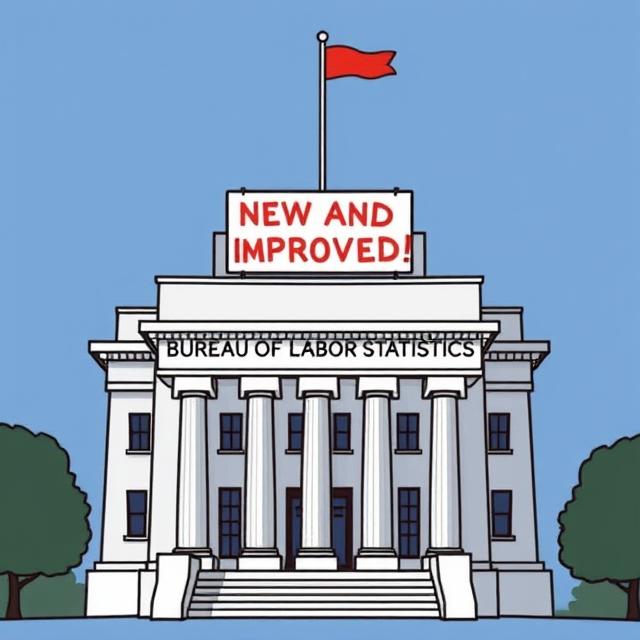
The firing of Bureau of Labor Statistics head Erika McEntarfer following July’s disappointing jobs report represents more than just political theater. It signals a fundamental breakdown in how we process uncomfortable economic realities. The numbers were undeniably poor: just 73,000 jobs added versus the expected 115,000, with massive downward revisions erasing 258,000 previously reported positions from May and June combined.
But shooting the messenger doesn’t change the message. The job market’s deceleration reflects deeper structural challenges that require leadership courage, not scapegoating. When political pressure overrides statistical integrity, we lose the foundation for sound business decision-making. Executive leaders must ask themselves: are we creating environments where uncomfortable truths can surface, or are we incentivizing the kind of wishful thinking that leads to strategic blindness?
The Tariff Paradox: Protection That Destroys
The administration’s tariff strategy reveals the complex relationship between policy intentions and market realities. While the White House claims a 10% global tariff would create 2.8 million jobs, independent economic analysis tells a starkly different story. Research from Goldman Sachs suggests that while tariffs might boost manufacturing employment by 100,000 jobs, they would eliminate roughly 500,000 positions overall, a net loss of five jobs for every one created.
When political pressure overrides statistical integrity, we lose the foundation for sound business decision-making.
The pattern is already visible. Trump’s 2018 steel tariffs during his first term created approximately 1,000 steel jobs while eliminating about 75,000 manufacturing positions due to higher input costs. Manufacturing companies face a brutal choice: absorb higher costs and reduce competitiveness or pass costs to consumers and risk demand destruction. Neither option preserves employment in the long term.
For executive leaders, this creates a strategic planning nightmare. How do you build workforce strategies when trade policy creates such dramatic winners and losers? The answer requires sophisticated scenario planning and the kind of leadership agility that can navigate rapidly changing conditions.
Tesla’s $29 Billion Question
Against this backdrop of employment uncertainty, Tesla’s decision to award Elon Musk approximately $29 billion in restricted stock reveals the growing disconnect between executive compensation and corporate performance. The timing couldn’t be more problematic. Tesla’s sales have declined significantly over the past six months:
Q1 2025 deliveries fell 13% year-over-year to roughly 336,700 units
Stock performance has been dismal, down 22% for the first half of 2025
International sales have cratered: 50% decline in Portugal, 45% in France, 42% in Sweden, and 48% in Norway
The company lost several weeks of production due to Model Y line changeovers across all four factories
The Tesla board’s rationale for this massive compensation package, coming just six months after a judge ordered the company to revoke Musk’s previous pay arrangement, raises fundamental questions about board governance and shareholder value creation. When a company awards historic compensation during a period of declining sales and market performance, it signals a dangerous detachment from performance-based accountability.
The Winners and Losers Under Current Policy
The economic landscape is creating distinct winners and losers, with implications that extend far beyond partisan politics:
The Winners:
Executives in protected industries who can command premium compensation while their sectors receive government protection
Companies with domestic supply chains that can avoid tariff impacts
Financial engineering specialists who can structure compensation packages to maximize tax advantages
Technology leaders whose platforms benefit from increased domestic manufacturing complexity
The Losers:
Manufacturing workers in industries dependent on imported materials
Consumer-facing companies that must absorb higher costs or reduce workforce
Middle-management professionals in trade-dependent sectors
Service industry workers whose employment depends on consumer spending power
The Leadership Accountability Gap
What emerges from this analysis is a troubling pattern: rewards flowing to the top while risks accumulate at the bottom. When Tesla’s board approves a $29 billion compensation package during a period of declining performance, while tariff policies eliminate five jobs for every one created, we’re witnessing a fundamental breakdown in the relationship between leadership accountability and economic outcomes.
This isn’t sustainable from either a business or social perspective. Shareholder activists are already questioning executive compensation practices, particularly when they appear disconnected from performance metrics. More importantly, the growing wealth and opportunity gap creates political and social instability that ultimately threatens business continuity.
Compensation Committee Oversight: Boards must develop more sophisticated metrics that tie executive compensation to long-term value creation rather than short-term financial engineering. The Tesla situation demonstrates how poorly designed compensation can damage both shareholder value and public perception.
Workforce Strategy Resilience: Companies need workforce strategies that can adapt to rapid policy changes. This means developing domestic and international talent pipelines, cross-training programs, and flexible employment models that can scale with changing trade conditions.
Stakeholder Communication: Leaders must communicate more transparently about how external policies affect their businesses and employment decisions. This includes honest discussions about the trade-offs between protection and growth, domestic and international opportunities.
Political Risk Management: The firing of a senior statistical official demonstrates how political pressure can compromise data integrity. Companies need independent sources of economic intelligence and must resist the temptation to make decisions based on politically convenient rather than economically sound information.
Companies need independent sources of economic intelligence and must resist the temptation to make decisions based on politically convenient rather than economically sound information.
Beyond the Numbers: A Leadership Imperative
The convergence of weak job growth, controversial trade policies, and excessive executive compensation creates more than just economic challenges. It poses fundamental questions about leadership responsibility in American capitalism.
When employment growth concentrates in narrow sectors like healthcare and social assistance while manufacturing opportunities decline, when trade policies designed to protect American workers actually eliminate more jobs than they create, and when executive compensation reaches historic levels during periods of poor performance, we’re not just seeing market dynamics at work. We’re witnessing the consequences of leadership decisions that prioritize short-term gains over long-term sustainability.
The solution requires more than policy adjustments or better economic data. It demands a fundamental recommitment to the principle that executive leadership serves stakeholders beyond just shareholders and management teams. This means designing compensation systems that reward long-term value creation, making strategic decisions that consider workforce impacts alongside financial returns, and maintaining the kind of economic honesty that enables sound decision-making.
The Path Forward
American business leadership faces a critical inflection point. We can continue on the current trajectory, protecting narrow interests while broader economic foundations weaken. Or we can embrace the more difficult path of balanced stakeholder capitalism.
This means accepting that executive compensation must bear some relationship to organizational performance and workforce outcomes. It means acknowledging that trade policies designed to help American workers should actually help American workers, not just create political talking points. And it means maintaining economic analysis capabilities that provide honest assessments rather than politically convenient narratives.
The alternative is an economic system that serves fewer and fewer participants while creating increasing instability for everyone else. That’s not just bad policy; it’s bad business.
For C-suite leaders, the choice is clear: lead the transition toward more sustainable and equitable business practices or watch market forces and political pressures impose less favorable solutions. The July jobs report, Tesla’s compensation controversy, and the tariff policy outcomes all point toward the same conclusion: business as usual is no longer a viable option.
The question isn’t whether change is coming. The question is whether executive leadership will drive that change or be driven by it.